Guide · 7 min read
Character AI Outfit Descriptions: 5 Slots, 10 Templates, and the Words That Actually Work
How to write outfit descriptions for Character AI characters that don't come out flat — the five slots to fill, the vocabulary that renders, and 10 copy-paste clothing templates you can reuse as image prompts.
Published November 2, 2026 · Updated November 2, 2026
Most outfit descriptions fail for one reason: they name a garment and stop. "She wears a red dress." "He wears a black jacket and jeans." A human reader fills in the gaps automatically. A model does not — it collapses the sentence into a generic red dress and a generic black jacket, and every character you write ends up wearing the same clothes.
The fix is not more adjectives. It's filling five slots that a garment description actually needs, in a fixed order, using words that describe shape and surface rather than mood. This guide gives you the five slots, the vocabulary for each, and ten finished descriptions you can paste into a character card or reuse as an image prompt.
Why outfit descriptions come out flat
A description does two jobs at once. It tells a reader what a character looks like, and it tells a model what to draw. Those are different jobs, and the second one is stricter.
When you write "a stylish outfit," you've described your own reaction to the clothes rather than the clothes. When you write "a red dress," you've given one slot out of five: color. The model has to invent silhouette, fabric, cut, and detail on its own, and it will invent the same ones every time — the average of everything it has seen.
Flat descriptions are almost always missing the same things:
- No silhouette. Is it fitted, boxy, oversized, draped, structured? This single word changes the outline more than any other.
- No fabric. Cotton, wool, satin, leather, and linen catch light differently. Without a fabric word, light has nothing to describe.
- No construction detail. Seams, lapels, cuffs, hardware, closures. These are what make a garment read as a specific garment instead of a category.
- Vague color. "Red" is a range. "Oxblood" is a point on it.
The five slots every outfit description needs
Fill them in this order. The order matters because silhouette constrains everything after it — a boxy jacket and a fitted jacket need different shoulders, different fabrics, and different accessories.
1. Silhouette
The outline, before any detail. One or two words.
fitted · relaxed · oversized · boxy-cut · drop-shoulder · tailored · draped · A-line · straight-leg · wide-leg · cropped · floor-length · cinched-waist · structured · bias-cut · sheath
2. Fabric and texture
What the surface does with light. This is where most descriptions leak quality.
matte cotton · brushed wool · raw denim · high-sheen satin · matte silk · ribbed knit · cable-knit · crinkled linen · pebbled leather · suede · velvet · chiffon · organza · jersey · twill · corduroy · quilted nylon · shearling · lace · mesh
3. Color and pattern
Name the shade, not the family. If there's a pattern, name its scale.
oxblood · bone white · ecru · charcoal · slate · forest · rust · mustard · dusty rose · camel · ivory · midnight navy
Pattern modifiers: fine pinstripe · wide stripe · micro-floral · oversized check · houndstooth · tonal print · color-blocked
4. Construction details
The small physical facts. Two or three per outfit is enough; more starts to read as a list.
notched lapel · shawl collar · welt pockets · patch pockets · storm flap · raglan sleeve · set-in sleeve · french cuff · raw hem · topstitching · visible zip · horn buttons · belt loops · pleated front · double-breasted
5. Accessories and footwear
One accessory, one shoe. Restraint here reads as style; piling them on reads as costume.
thin silver chain · signet ring · leather watch strap · canvas tote · structured shoulder bag · cropped leather jacket · ankle boots · derby shoes · low-profile sneakers · strappy sandals · knee-high boots
10 copy-paste outfit descriptions
Each one fills all five slots in about forty words. Paste as-is for a character card, or drop the whole sentence into an image prompt — the vocabulary works for both.
1. Streetwear, off-duty
Wearing an oversized boxy-cut hoodie in heather grey brushed cotton, drop-shoulder seams and a raw hem, layered over a white ribbed tank. Straight-leg raw denim in mid indigo with visible topstitching, low-profile canvas sneakers, and a thin silver chain at the collar.
For image prompts: keep the boxy silhouette word and the brushed cotton — that pairing is what produces the soft, heavy look rather than a flat graphic hoodie.
2. Minimalist office
A tailored single-breasted blazer in charcoal wool twill with notched lapels and welt pockets, worn open over an ecru silk shell. Straight-leg trousers in the same cloth, ankle boots in pebbled black leather, and a slim leather-strap watch.
For image prompts: "the same cloth" keeps jacket and trousers reading as one suit instead of two separates that happen to match.
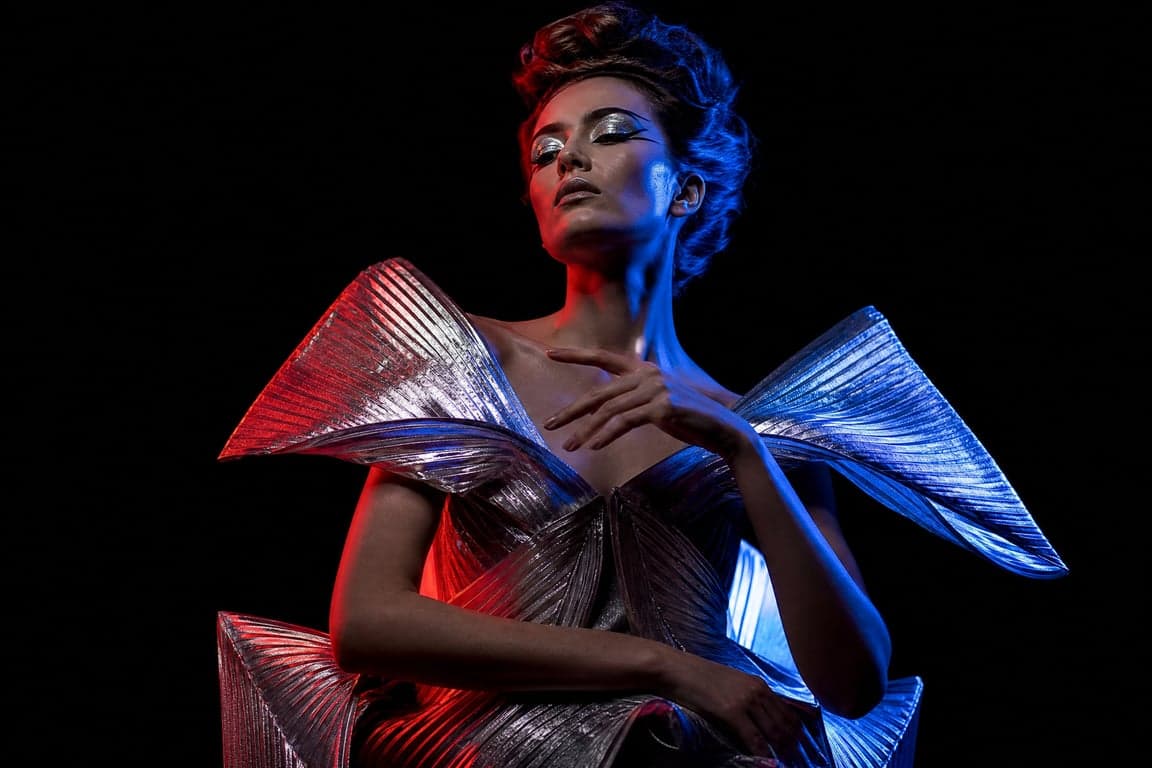
3. Avant-garde editorial
A draped bias-cut dress in matte silk, asymmetrical hem falling just below the knee, in deep oxblood. One shoulder is structured and the other left bare, with an oversized organza sleeve attached at the wrist. Sculptural heeled sandals in black, no jewelry.
For image prompts: asymmetry needs to be stated twice — once as a shape, once as a contrast — or the model averages it back into a symmetric dress.
4. Cottagecore, layered
A floor-length A-line dress in crinkled ivory linen with a cinched waist and a fine micro-floral print at low density. A cropped knit cardigan in dusty rose, worn open, and a canvas tote with a leather base. Strappy leather sandals, and a woven straw hat carried rather than worn.
For image prompts: "low density" on the print is doing real work — without it, micro-floral renders as an all-over wallpaper pattern.
5. Cyberpunk, utility
A fitted technical jacket in quilted black nylon with reflective piping at the seams, high collar and storm flap, cropped at the waist. Wide-leg cargo trousers in slate grey ripstop with multiple patch pockets, chunky soled boots, and a single mesh sleeve visible at the wrist.
For image prompts: reflective piping and mesh are the two details that read as "technical" rather than "military" — swap them and the whole outfit changes genre.
6. Nineties grunge
A relaxed flannel shirt in rust and charcoal oversized check, worn open over a faded band tee in washed black cotton. Straight-leg jeans in worn indigo with a raw hem, lace-up combat boots, and a stretched-out knit beanie.
For image prompts: "oversized check" not "plaid" — plaid pulls toward preppy, oversized check pulls toward the decade you want.
7. Athletic, off-shift
A cropped zip-through track jacket in midnight navy tricot with contrast white piping at the shoulders and a stand collar. Matching wide-leg track trousers with a snap hem, low-profile retro sneakers in bone white and navy, and a thin silver chain.
For image prompts: tricot and piping together are what separate a 1970s track jacket from a modern gym layer.
8. Vintage glamour
A sheath dress in high-sheen black satin, bias-cut with a cowl neckline and a low draped back, falling to mid-calf. Opera-length gloves in matte kid leather, strappy sandals, and a single statement earring in dark crystal.
For image prompts: satin needs a light direction to look like satin. Pair this description with a hard side key light or it renders as flat black fabric.
9. Uniform, borrowed
A boxy blazer in midnight navy wool with brass buttons and a crest patch at the chest pocket, worn two sizes too large over a white cotton shirt with the collar open. Pleated wool skirt in charcoal, knee socks, and scuffed derby shoes.
For image prompts: "two sizes too large" is the load-bearing phrase. Without it the uniform reads as correct-fitting and loses the entire character.
10. Fantasy, practical
A knee-length tunic in undyed crinkled linen with a leather belt at the waist, layered under a short shearling vest in warm brown. Wide-leg trousers in coarse wool, worn leather boots with wrapped straps, and a canvas satchel across the body.
For image prompts: "undyed" and "coarse" keep fantasy clothing from turning into costume satin — the fabric words are what make it look lived-in.
How to reverse an outfit from a photo
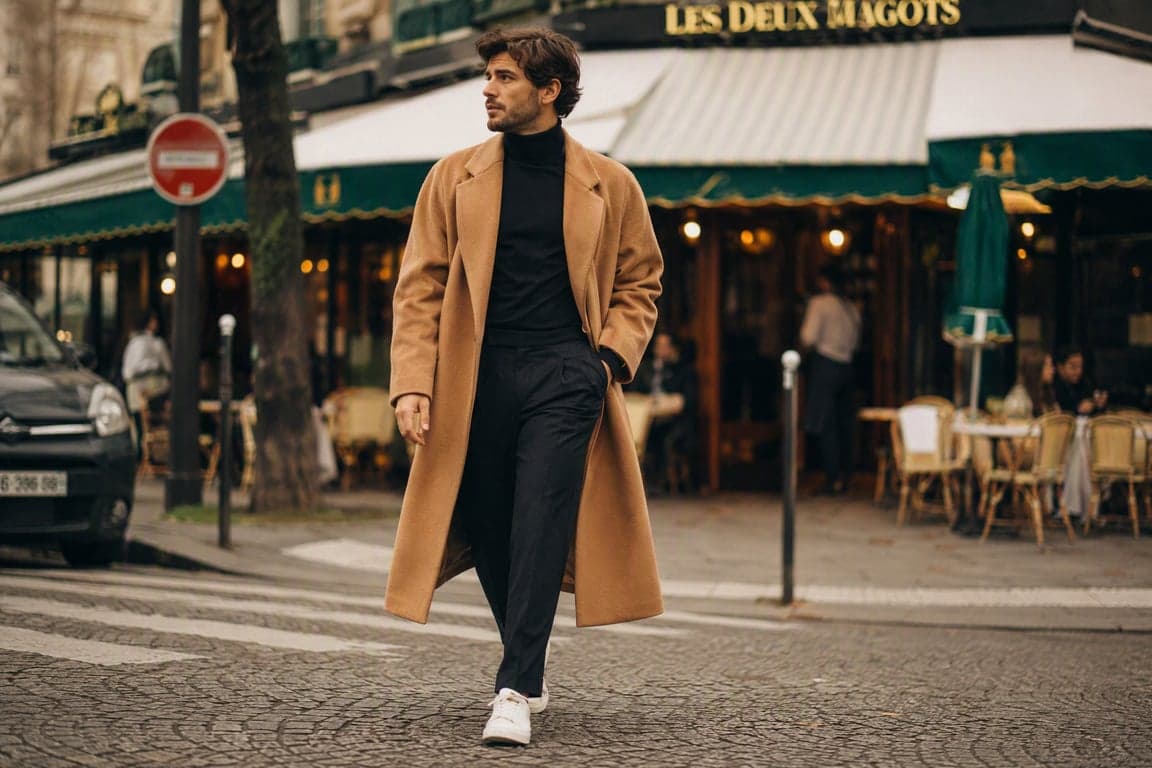
If you're writing a description of an existing look — a reference photo, a runway shot, a screenshot — read it in the same five-slot order rather than describing it left to right.
- Squint at it. Drop the details and describe only the outline. That's your silhouette.
- Find the highlight. The brightest small area on the garment tells you the fabric family. Sharp pinpoint highlight: satin or leather. Broad soft glow: wool or brushed cotton. No highlight at all: matte cotton, linen, or suede.
- Name the shade against a reference. Not "green" but "forest," not "brown" but "camel." If you can't name it, describe it as a relationship: "the green of a dark beer."
- Count the construction details you can actually see. Two or three, usually. If you're inventing a fourth, stop — you're writing what you expect, not what's there.
- Separate what's worn from what's carried. Bags, hats held in hand, and jackets over the arm are different from garments on the body, and models treat them differently.
Common mistakes
Stacking adjectives on one slot. "A beautiful elegant luxurious red dress" fills one slot four times. You get nothing extra and you crowd out the four slots that matter.
Describing mood instead of surface. "A cool edgy jacket" tells a model nothing it can draw. "A cropped black leather biker jacket with silver hardware" tells it six things.
Forgetting the shoes. Footwear is the fastest way to place a character in a world. The same outfit with derby shoes and with chunky sneakers is two different people.
Over-specifying the face and under-specifying the clothes. In a character card, clothing is often what readers actually picture. Give it at least as many words as the hair.
Using the same text as an image prompt
Everything above is a clothing description, but it's also a prompt fragment. The five slots map directly onto what image models weight most heavily: silhouette words control the outline, fabric words control specular response, construction details control the small rendering decisions that make a garment look real.
To turn any of the ten descriptions into a portrait prompt, prepend a subject and append a camera and light setup:
A photographic waist-up portrait of a fictional adult woman in her early thirties, medium-brown skin, short dark hair. [paste the outfit description]. Soft window light from camera left, gentle fill on the shadow side, eye-level, plain warm-grey background.
Then change one slot at a time. Hold the lighting and framing fixed and swap only the fabric word — you'll see the lighting behave differently on wool than on satin, which is the single most useful thing you can learn from a controlled comparison. If you want the full method for holding variables steady, see our portrait composition guide and the skin tone and lighting guide.
If you'd rather start from a finished recipe than build one, the fashion editorial prompt collection has full outfits already paired with light and framing.
Privacy and content note
Everything here is about clothing — cut, fabric, color, hardware, accessories. These templates don't describe bodies, and they aren't meant to. Keep character descriptions to wardrobe, posture, and styling; if a platform's rules restrict a category of content, a detailed outfit won't get you around that, and it isn't the goal here.
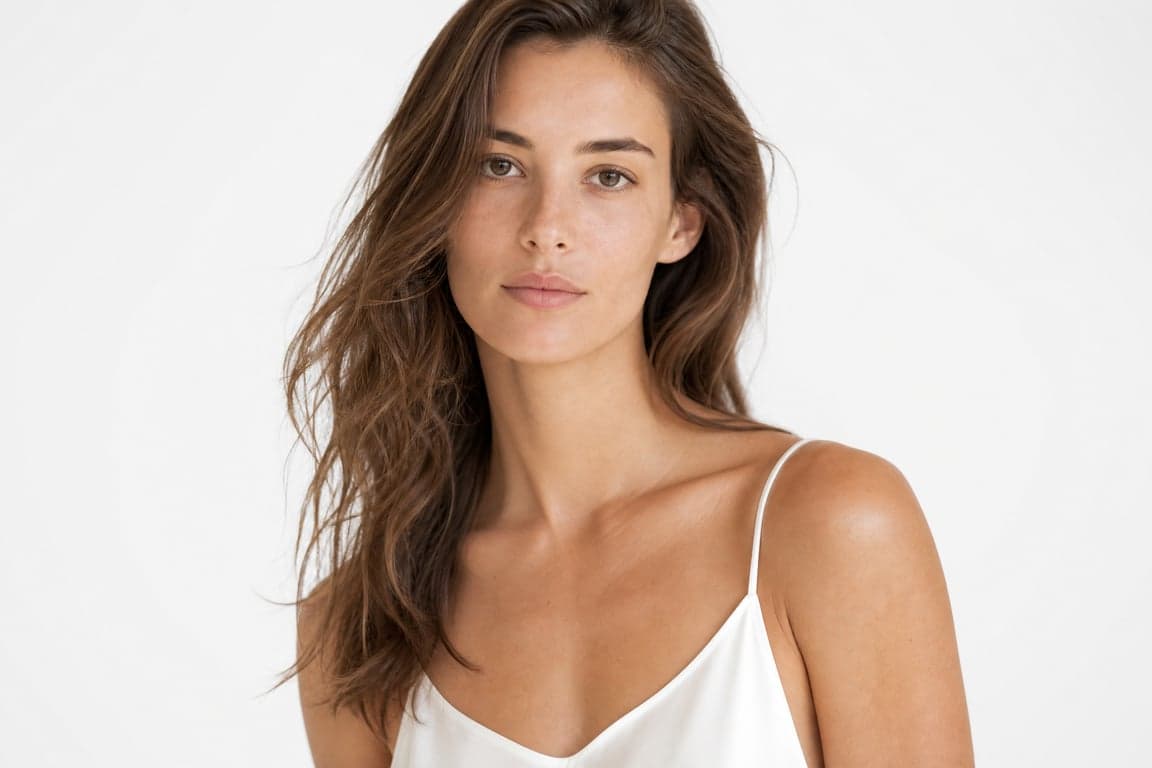
A practical note on photos: if you're reverse-engineering an outfit from an image, use a product shot, a runway photo, or your own picture. Reproducing a real, identifiable person's appearance for a character card is a separate problem from describing clothes, and it's one we don't cover.
More prompts
- AI portrait composition guide — framing, crop, and how much of the outfit to show
- 1980s photo prompt — a full trend breakdown with ten era-specific wardrobe prompts
- Fashion editorial prompts — finished recipes with light and lens already set